
Can rainwater effectively clean solar panels, or is manual cleaning necessary?
Solar panels are a significant investment in sustainable energy, and keeping them clean is essential for optimal performance. While rainwater might seem like a convenient cleaning solution, it often falls short of ensuring your panels are spotless. Rain can remove some dirt and debris, but it generally lacks the power to eliminate stubborn grime or accumulated dust.
In many cases, manual cleaning is necessary to maintain the efficiency of your solar panels. Regular maintenance ensures that panels operate at their maximum potential, providing the best return on your investment. Let’s explore why manual cleaning is often required despite the occasional downpour.
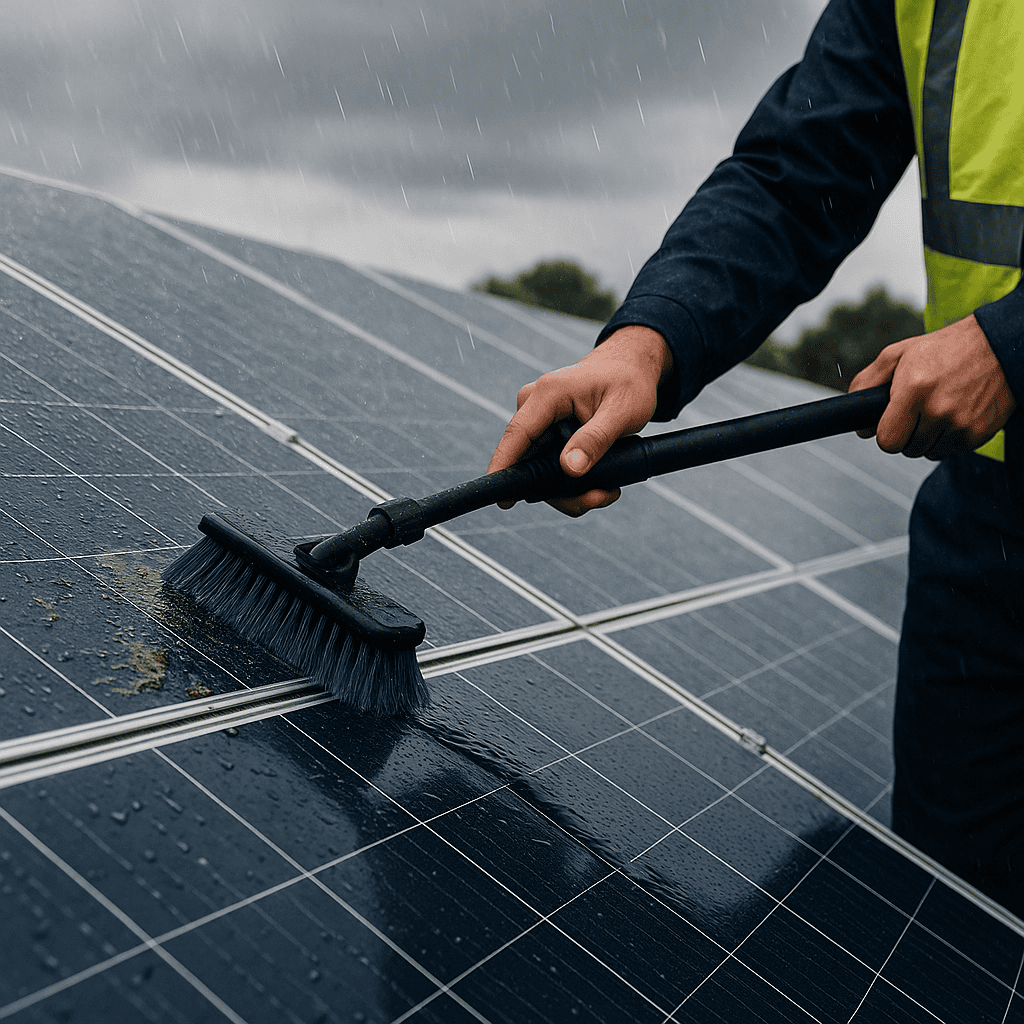
Rainwater can indeed help in rinsing off loose dirt and debris from solar panels, but it is not a comprehensive cleaning solution. Over time, pollutants, bird droppings, and other residues can build up on the surface, reducing the panels’ ability to absorb sunlight effectively. Relying solely on rainwater might lead to decreased energy efficiency and, subsequently, lower energy output.
Manual cleaning, on the other hand, provides a thorough cleanse that rainwater simply cannot achieve. By using appropriate cleaning tools and techniques, one can ensure that all types of dirt are removed, maximising the panels’ exposure to sunlight. This process is especially crucial in areas with high levels of pollution or where panels are installed at a low tilt angle, making them more susceptible to dirt accumulation.
Furthermore, regular manual cleaning allows for routine inspections, ensuring that any damage or wear is promptly addressed. This proactive approach not only extends the lifespan of the panels but also guarantees their optimal performance. Thus, while rainwater can assist in the upkeep of solar panels, manual cleaning remains an indispensable part of their maintenance regimen.