
Which type of inverter is better for residential solar installations: string or microinverters?
When considering residential solar installations, choosing the right inverter is crucial. The decision often comes down to two main types: string inverters and microinverters. Each has its own advantages and potential drawbacks, making the choice dependent on specific household needs and circumstances. String inverters are generally more cost-effective and are a well-established technology, while microinverters offer greater efficiency in certain conditions, particularly when dealing with shading or complex roof designs.
Ultimately, the better choice between string inverters and microinverters depends on your specific situation. If your roof receives consistent sunlight with minimal shading, a string inverter might be the most economical and efficient option. Conversely, if your roof is subject to shading or has multiple orientations, microinverters could provide improved performance by optimising the output of each solar panel individually.
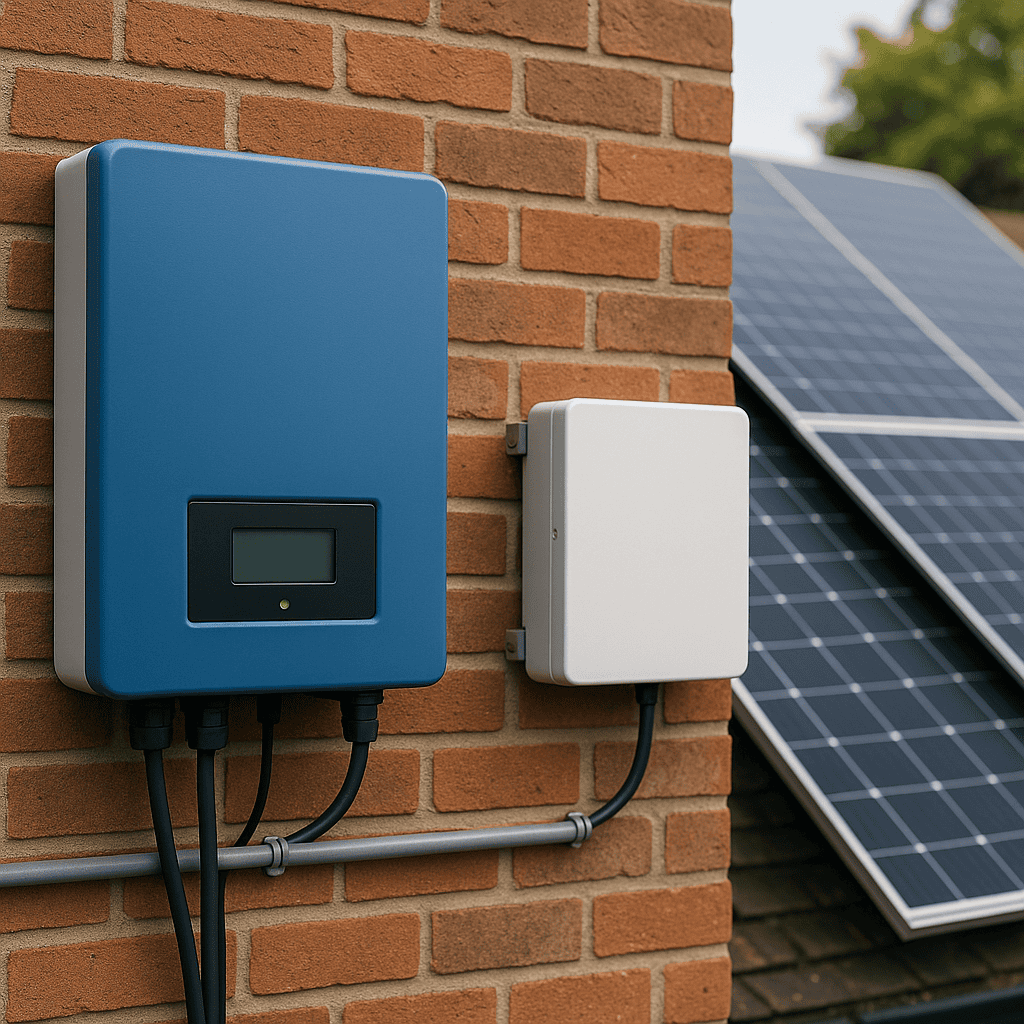
String inverters operate by connecting a series of solar panels in a ‘string’, converting the direct current (DC) electricity generated into alternating current (AC) for home use. This method is cost-effective and efficient for installations where panels are uniformly exposed to sunlight. However, if one panel in the string is shaded or underperforms, it can affect the output of the entire system.
Microinverters, on the other hand, are installed on each solar panel, allowing them to operate independently. This means that if one panel is shaded or malfunctioning, it does not impact the performance of the others. This feature makes microinverters particularly advantageous for roofs with varying angles or shading patterns, ensuring maximum energy production.
Cost is another important factor to consider. While microinverters tend to be more expensive upfront, they can offer savings over time through enhanced efficiency and potentially lower maintenance costs. Moreover, the ability to monitor each panel individually can aid in identifying and resolving issues promptly, further enhancing their appeal for some homeowners.